Rabu, 03 Maret 2010

Kodam Jaya

Komando Daerah Militer Jaya

Dari Wikipedia bahasa Indonesia, ensiklopedia bebas

Langsung ke: navigasi, cari

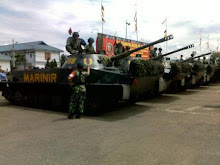
Kodam Jaya merupakan Komando Kewilayahan Pertahanan yang meliputi DKI Jaya, Tangerang dan Bekasi. Pangdam Jaya yang sekarang menjabat adalah Mayor jenderal Darpito Pudyastungkoro.

Daftar isi

[sembunyikan]

[sunting] Sejarah

Berdirinya Komando Militer Kota Jakarta Raya (KMKB Jakarta Raya) adalah adalah pada tanggal 24 Desember 1949 yaitu dalam rangka untuk menerima tanggungjawab di bidang keamanan kota Jakarta dari Angkatan Perang Belanda. Selanjutnya pada tanggal 24 Oktober 1959 KMKB Jakarta Raya berubah menjadi Komando Daerah Militer V/Jayakarta (Kodam Jaya) setelah dikeluarkan Keputusan Kasad Nomor : 952/10/1959 tentang pelaksanaan penyempurnaan pembagian wilayah Kodam-kodam sedangkan pelaksanaan peresmian Kodam Jaya itu sendiri dilakukan pada tanggal 18 Januari 1960 pukul 09.00 wib di Lapangan Banteng. Walaupun peresmian Kodam Jaya pada tanggal itu, namun untuk memperingati Hari Ulang Tahun Kodam Jaya adalah pada tanggal lahirnya KMKB Jakarta Raya yaitu pada tanggal 24 Desember 1949.

Satuan infanteri:

Satuan Artileri Pertahanan Udara:

[sunting] Daftar Panglima

[sunting] Tingkat Komando Satuan Pelaksana Kodam

  1. Korem 051/WKT
  2. Korem 052 WKR
  3. Resimen Induk Militer Kodam Jaya

Kodam II/Sriwijaya

Komando Daerah Militer II/Sriwijaya

Dari Wikipedia bahasa Indonesia, ensiklopedia bebas

Langsung ke: navigasi, cari
Logo kodam-2.gif

Komando Daerah Militer II/Sriwijaya (sering disingkat Kodam II, Kodam Sriwijaya atau Kodam II/Sriwijaya) merupakan Komando Kewilayahan Pertahanan yang meliputi provinsi Bengkulu, Jambi, Sumatra Selatan, Kepulauan Bangka Belitung dan Lampung. Pangdam II/Sriwijaya yang sekarang menjabat adalah Mayor Jenderal TNI Muhammad Sochib sejak Januari 2008.

Daftar isi

[sembunyikan]

[sunting] Sejarah Pembentukan Kodam II Sriwijaya

Diawali dari adanya berbagai organisasi bersenjata yang pernah ada di wilayah Sumatera Selatan seperti Badan Penjaga Keamanan Rakyat (BPKR), kemudian berubah menjadi Badan Keamanan Rakyat (TKR) merupakan jejak langkah sejarah berdirinya KODAM II/SRIWIJAYA.

[sunting] Penggantian nama

  • 1 Januari 1946, bernama Sub Komandemen Sumatera Selatan
  • 10 Januari 1946, bernama Divisi VIl/Garuda
  • 1 Juli 1946, kembali menjadi Sub Komandemen Sumatera Selatan yang membawahi 4 Teritorium yaitu Palembang, Jambi, Bengkulu dan Lampung
  • 29 Juli 1950, berdasarkan keputusan KASAD Nomor :83/KSAD/Pati/1950 menjadi, Tentara dan Teritorium (TT) II/Sriwijaya
  • 1 Februari 1961, menjadi Komando Daerah Militer IV/Sriwijaya
  • 12 Februari 1985 s/d sekarang, menjadi Komando Daerah Militer II/Sriwijaya melalui Surat Keputusan KASAD Nomor : Skep/346/II/1985

[sunting] Kowil di Wilayah Kodam Sriwijaya

  1. Korem 041/Gamas, meliputi wilayah Provinsi Bengkulu
  2. *Kodim 0407/Bengkulu
  3. *Kodim 0408/Bengkulu Selatan
  4. *Kodim 0409/Rejang Belong
  5. *Kodim 0423/Bengkulu Utara
  6. Korem 042/Gapu, meliputi wilayah Provinsi Jambi
  7. *Kodim 0415/Batanghari
  8. *Kodim 0416/Bungotebo
  9. *Kodim 0417/Kerinci
  10. *Kodim 0419/Tanjung Jabung
  11. *Kodim 0420/Sarolangun Bangko
  12. Korem 043/Gatam, meliputi wilayah Provinsi Lampung
  13. *Kodim 0410/Bandar Lampung
  14. *Kodim 0411/Lampung Tengah
  15. *Kodim 0412/Lampung Utara
  16. *Kodim 0421/Lampung Selatan
  17. *Kodim 0422/Lampung Barat
  18. *Kodim 0424/tanggamus
  19. Korem 044/Gapo, meliputi wilayah Provinsi Sumatera Selatan dan Kepulauan Bangka Belitung
  20. *Kodim 0401/Muba
  21. *Kodim 0402/Oki
  22. *Kodim 0403/Oku
  23. *Kodim 0404/Muara Enim
  24. *Kodim 0405/Lahat
  25. *Kodim 0406/Musi Rawas
  26. *Kodim 0413/Bangka
  27. *Kodim 0414/Belitung
  28. *Kodim 0418/Palembang

[sunting] Batalyon di bawah Kodam Sriwijaya

Saat ini Kodam II/Sriwijaya membawahi Lima Provinsi yang terdiri dari 4 Korem, 24 Kodim, 228 Koramil dan 1832 Babinsa.

Kodam I/Bukit Barisan

Komando Daerah Militer I/Bukit Barisan

Dari Wikipedia bahasa Indonesia, ensiklopedia bebas

Langsung ke: navigasi, cari
Logo Kodam BB

Komando Daerah Militer I/Bukit Barisan (sering disingkat Kodam I, Kodam Bukit Barisan, Kodam I/Bukit Barisan atau Kodam I/BB), dulunya bernama Komando Daerah Militer II/Bukit Barisan, merupakan Komando Kewilayahan Pertahanan yang meliputi provinsi Sumatera Utara, Sumatera Barat dan Riau. Pangdam I/Bukit Barisan yang sekarang menjabat adalah Mayor Jenderal TNI Burhanuddin Amin sejak 3 November 2008, menggantikan Mayor Jenderal TNI Markus Kusnowo.

Daftar isi

[sembunyikan]

[sunting] Sejarah

Pada 30 September 1945, pemuda-pemudi yang mencintai Kemerdekaan Republik Indonesia yang diproklamasikan pada 17 Agustus 1945 membentuk organisasi-organisasi massa. Seperti di Aceh berdiri Ikatan Pemuda Indonesia (IPI), di Medan Barisan Pemuda Indonesia (BPI), di Sumatera Barat, Pemuda Republik Indonesia (PRI) dan di Riau Pemuda Indonesia (PI). Organisasi-organisasi massa yang banyak berdiri itulah di antaranya menjelma menjadi Tentara Keamanan Rakyat (TKR).

[sunting] Pembentukan TKR

Tanggal 10 Oktober 1945 di daerah Sumbagut secara resmi terbentuk TKR, tanggal 12 Oktober 1945 di Aceh TKR Divisi V, tanggal 10 Oktober 1945 di Sumatera Timur TKR Divisi IV, tanggal 10 November 1945 di Tapanuli Divisi VI dan tanggal 1 Januari 1946 di Sumatera Tengah (Sumbar-Riau) TKR Divisi III. Pada tanggal 13 Desember 1949 dibentuk Komando Tentara Teritorium Sumatera Utara (KO TT-SU), yang wilayahnya meliputi: Aceh, Sumatera Timur dan Tapanuli.

[sunting] KO TT-I/SU

Berdasarkan Penetapan Kasad No: 83/Kasad/Pnt/1950 tanggal 20 Juni 1950 Komando Tentara Teritorium Sumatera Utara (KO TT-SU) dirubah menjadi Komando Tentara Teritorium-I Sumatera Utara (KO TT-I/SU) dan wilayahnya meliputi Aceh, Sumatera Utara, Sumatera Barat dan Riau.

Tanggal 20 Juni 1950 inilah ditetapkan sebagai Hari Jadi Kodam I/Bukit Barisan yang dikuatkan dengan ST Kasad No:ST/636/V/1986 tanggal 20 Mei 1986. Berdasarkan Penetapan Panglima KO TT-I/SU Nomor : 247/V/ORG/1951, selanjutnya tanggal 21 Juni 1951 KO TT-I/SU berubah menjadi KO TT-I/Bukit Barisan (KO TT-I/BB), sedangkan wilayahnya sama dengan KO TT-I/SU.

KO TT-I/BB membawahi 4 Resimen Infanteri, yaitu :

Tanggal 27 Desember 1956 Resimen Infanteri 1 Aceh dan 4 di Sumatera Barat-Riau dipisahkan dari KO TT-I/BB dan selanjutnya masing-masing berkembang menjadi Komando Daerah Militer (KODAM). Di Aceh dibentuk Kodam I/Iskandar Muda, di Sumatera Barat-Riau dibentuk Kodam III/17 Agustus dan KO TT-I/BB berubah menjadi Kodam II/Bukit Barisan.

[sunting] Penggabungan Kodam

Berdasarkan Perintah Operasi Kasad No:011/1984 tanggal 22 september 1984 tentang Reorganisasi TNI-AD yang kemudian disempurnakan dengan Surat Telegram Kasad No:STR/430/1984 tanggal 21 Oktober 1984 dan STR/603/1984 tanggal 28 Desember 1984, jumlah Kodam yang ada dikurangi menjadi 10 Kodam. Kodam I/Iskandar Muda, Kodam II/Bukit Barisan dan Kodam III/17 Agustus dilikuidasi atau dikurangi.

Ketiga Kodam tersebut dijadikan satu dengan nama Kodam I/Bukit Barisan dan wilayahnya meliputi : Aceh, Sumatera Utara, Sumatera Barat dan Riau.

Atas dasar itu, Kodam I/BB saat itu telah membawahi 6 buah Korem, yaitu Korem 011/Lilawangsa di Lhokseumawe, Korem 012/Teuku Umar di Banda Aceh, Korem 022/Pantai Timur di Pematang Siantar, Korem 023/Kawal Samudra di Sibolga, Korem 031/Wira Bima di Pekanbaru, Korem 032/Wira Braja di Padang.

[sunting] Pembentukan kembali Kodam Iskandar Muda

Dan mulai dari 5 Februari 2002 lalu, atas kebijakan pemerintah Kodam Iskandar Muda dinyatakan berdiri kembali dan membawahi 2 Korem yakni Korem 011/Lilawangsa dan Korem 012/Teuku Umar.

[sunting] Korem di Kodam I/Bukit Barisan

Sesuai dengan Surat Keputusan Kepala Staf Angkatan Darat ( KASAD ) Nomor : Kep / 67 / XII / 2005 tanggal 30 Desember 2005 telah dibentuk Korem 033/Wira Satya Kodam I/BB, dengan demikian Korem yang berada di bawah Kodam I/BB menjadi 5 Korem yaitu :

  1. Korem 022/Pantai Timur berkedudukan di Pematang Siantar membawahi 5 Kodim, 85 Koramil dan 3 Yonif (Yonif 121/MK, Yonif 122/TS dan Yonif 126/KC).
  2. Korem 023/Kawal Samudra berkedudukan di Sibolga membawahi 6 Kodim , 75 Koramil dan 2 Yonif (Yonif 123/RW dan Yonif 125/SMB)
  3. Korem 031/Wirabima berkedudukan di Pekan Baru, Riau membawahi 5 Kodim, 50 Koramil, 2 Yonif (Yonif 132/BS), Yon Arhanuse-13/Pekanbaru dan Denrudal 004 Dumai.
  4. Korem 032/Wirabraja berkedudukan di Padang, Sumatera Barat membawahi 9 Kodim, 83 Koramil dan 2 Yonif (Yonif 131/BRS dan Yonif 133/YS) serta Den Zipur-2.
  5. Korem 033/Wira Pratama yang berkedudukan di Tanjung Pinang, Kepulauan Riau dengan membawahi 4 Kodim.(Yonif 134/TS)

[sunting] Tingkat Komando Satuan Pelaksana Kodam

  1. Korem 022/Pantai Timur (PT)
  2. Korem 023/Kawal Samudra (KS)
  3. Korem 031/Wirabima (WBM)
  4. Korem 032/Wirabraja (WBR)
  5. Korem 033/Wira Pratama (WPT)
  6. Resimen Induk Militer Kodam I/Bukit Barisan

[sunting] Satuan di Kodam I/BB

Batalyon yang ada :

Detasemen yang ada:

Kompi yang ada:

  • Kompi Kavaleri Serbu di Pekanbaru

Sementara itu, Kodam I/BB juga mempunyai satuan Berdiri Sendiri yang terdiri dari:

Kodam IM

Komando Daerah Militer Iskandar Muda

Dari Wikipedia bahasa Indonesia, ensiklopedia bebas

Langsung ke: navigasi, cari
Logo Kodam IM

Komando Daerah Militer Iskandar Muda (sering disingkat Kodam Iskandar Muda atau Kodam IM), dulunya bernamaKomando Daerah Militer I/Iskandar Muda merupakan Komando Kewilayahan Pertahanan yang meliputi provinsi Nanggroe Aceh Darussalam. Sejak berdiri pada 22 Desember 1956 sampai dilikuidasi pada 1985, Kodam Iskandar Muda telah dikendalikan 10 panglima. Yang terakhir menjabat sebelum dibekukan adalah Brigadir Jenderal TNI Nana Narundana.

Kodam Iskandar Muda dihidupkan kembali pada 5 Februari 2002. Mayor Jenderal TNI Djali Yusuf adalah panglima pertama setelah Kodam ini aktif kembali. Pangdam Iskandar Muda yang sekarang menjabat adalah Mayor Jenderal TNI Soenarko yang menggantikan Mayor Jenderal TNI Supriadin AS sejak Juli 2008. Supriadin AS telah dipromosikan menjadi Asisten Panglima TNI pada Juli 2008. Satuan infanteri yang ada di Kodam ini antara lain Yonif 111, Yonif 112, Yonif 113, Yonif 114, Yonif 115, dan Yonif 116.

Daftar isi

[sembunyikan]

[sunting] Kowil di Wilayah Kodam Iskandar Muda

Korem 011/Lilawangsa
Korem ini bermarkas di Kota Lhokseumawe, memiliki satuan jajaran terdiri dari:
Korem 012/Teuku Umar
Korem ini bermarkas di Kota Meulaboh, memiliki satuan jajaran terdiri dari:

[sunting] Satuan-satuan lainnya

  1. Resimen Induk Militer Kodam Iskandar Muda
  2. Yonzipur 16/Dhika Anoraga di Indrapuri, Aceh Besar
  3. Denrudal 001 Pulo Rungkom-Lhokseumawe, Aceh
  4. Yonkav 11/Serbu di Jantho, Aceh Besar

beritahankam 4 Maret 2010

Thursday, March 04, 2010

Kementrian Pertahanan Ajukan RUU Keamanan Nasional ke Parlemen

JAKARTA - Kementerian Pertahanan akan kembali mengajukan RUU Keamanan Nasional dalam Program Legislasi Nasional 2010 menyusul diterbitkannya Instruksi Presiden nomor 1/2010 tentang Percepatan Pelaksanaan Prioritas Pembangunan Nasional Tahun 2010.

"Embrionya sudah ada dalam pembahasan beberapa waktu lalu dengan melibatkan banyak elemen, sekarang akan dimajukan lagi berdasar Inpres tersebut yang antara lain memprioritaskan penyusunan RUU Keamanan Nasional," ungkap Wakil Menteri Pertahanan Sjafrie Sjamsoeddin di Jakarta, Selasa (2/3).

"Pada Prolegnas 2010, hanya RUU Komponen Cadangan yang disetujui untuk masuk dalam pembahasan periode 2010-2014. Dengan adanya Inpres tersebut, maka kita ajukan lagi dan masih dibicarakan dengan pihak parlemen," kata Sjafrie.

Seperti diketahui Inpres nomor 1/2010 mencantumkan prioritas bidang keamanan yaitu pengamanan NKRI dan penanggulangan tindak terorisme; peningkatan kemampuan peralatan pertahanan keamanan (alutsista); pembentukan Badan Nasional Pengelola Daerah Perbatasan; Inventarisasi data dan penamaan pulau-pulau kecil terluar; Penyusunan RUU Keamanan Nasional; Pemberian tunjangan khusus bagi prajurit TNI/PNS yang bertugas di kawasan perbatasan; dan revitalisasi industri strategis pertahanan dan keamanan nasional.

Sumber : ANTARA

Minim Sinyal Komunikasi Di Perbatasan

ENTIKONG - Seorang anggota Satgas Pengamanan Perbatasan (Pamtas) dari Yonif 642 Kapuas mencari sinyal ponsel dari atas ketinggian di sekitar Pos Pamtas Sungai Daun, Kecamatan Sekayam, Kabupaten Sanggau, Kalbar, Rabu (3/3). Sulitnya mendapatkan akses komunikasi di daerah pedalaman yang berbatasan langsung dengan Malaysia, merupakan salah satu faktor yang mengakibatkan daerah ketinggalan informasi terkait perkembangan NKRI. FOTO ANTARA/Jessica Wuysang/nz/10

defense studies 1

02 Maret 2010

Royal New Zealand Air Force Flying Display Team Grounded Following Mid-Air Collision

2 Maret 2010

CT-4E of the RNZAF's Red Checkers (photo : Airliners)

The Royal New Zealand Air Force's Red Checkers flying display team has been grounded following the 1 March collision of two of the team's aircraft. The incident happened just weeks after a team member died in an air crash.

"During training this morning [1 March] two aircraft of the RNZAF display team touched causing minor damage to one of the aircraft," says the New Zealand Defence Force. The Pacific Aerospace CT/4E trainers then landed safely, it says, adding: "How this incident happened is now being investigated as a matter of course and the prudent decision is not to fly the team again this season."

The incident occurred at the RNZAF Ohakea base, near Palmerston North on New Zealand's north island, where the team had been practising for the New Zealand Warbirds Over Wanaka air show in April. The grounding means the team has pulled out of this show.

Red Checker squadron leader Nick Cree died in an accident on 14 January near Ohakea base. He reportedly crashed his CT/4E trainer after performing a solo manoeuvre as part of an air display practice.

Five Cavalry and Mechanised Regiments will be Equipped with 8x8 APC Started from Tenth Malaysian Plan

2 Maret 2010

Proposed Zimbru 2000 for the Malaysian Army (photo : KLSR)

KLS: Malaysian Army Chief General Tan Sri Muhammad Ismail Jamaluddin announced that the Joint Chiefs Committee has already agreed to equip all five cavalry and mechanized regiments with new type of 8x8 APC.

He said the acquisition program was already registered under the Tenth Plan.
He added Condors and Sibmas APC will reach its service life in near future, and it is not cost effective to refurbish those obsolete platforms anymore.

Apart from that, he said the Army is also planning to equip those 8x8 APC with long range Anti-Tank Missile missile.

The traditional local shipbuilder - BHIC, is also devoting itself in promoting 8x8 APC. BHIC is colloborating with Romanian ROMARM company to study the posibility of assembling Zimbru 2000 8x8 APC in Malaysia and supply to the Army.


(KLSReview)

01 Maret 2010

Vietnam Imports Yakhont Coast-to-Ship Missile

1 Maret 2010

Yakhont mobile : coast to ship version (image : abovetopsecret)

An authoritative source from the Russian shipbuilding industry told Kanwa on a very official occasion that Vietnam would start to receive one battalion of Yakhont coast-to-ship missiles from this year. This is the first time that the coast launched Yakhont SSM has been exported to another country.

India Unveils $32B Defense Budget

1 Maret 2010

Indian Army during parade (photo : Militaryphotos)

NEW DELHI - India announced a four percent increase in defense spending to $32 billion in its annual budget Feb. 26, a day after Pakistan voiced concerns over its rival's military modernization.

"Secure borders and security of life and property foster development and needless to say, any additional requirement for the security of the nation will be provided for," Finance Minister Pranab Mukherjee told parliament.

Spending on the military - the world's fourth largest - was put at 1.47 trillion rupees ($32 billion) for the financial year to March 2011.

Last year's budget hiked defense expenditure by almost a quarter - the sharpest rise ever.

Mukherjee earmarked $13 billion for modernization projects, $12.4 billion for the million-plus army, with $3.3 billion for the air force and about $2 billion for the navy.

On Feb. 25, Pakistan's Foreign Secretary Salman Bashir - in New Delhi for talks with his Indian counterpart - had warned that India's military modernization program threatened stability in a "nuclearized" South Asia.

"New war doctrines, a tremendous boost to defense spending, the induction of new sophisticated weapons systems; these are elements that are prejudicial to regional security and stability," Bashir told reporters.

New Delhi, which last month inducted its longest range nuclear-tipped missile into the army, plans to spend up to 30 billion dollars modernizing its military by 2012, according to the defense ministry.

India has fought three wars with Pakistan since independence in 1947 and a brief but bitter war with China in 1962 over a border dispute which remains unresolved.
The largest weapons buyer among emerging countries, India has imported military hardware worth $28 billion dollars since 2000 mainly from Russia, Israel, France and Britain.

Ideally, Army are Looking at between 6 and 12 Attack Helicopters

1 Maret 2010

Malaysian Army wants purchase of attack helicopter expanding the 11 AW-109 as light observation helicopters (photo : Finmeccanica)

Army Eyes Attack Copter

KUALA LUMPUR: While the emphasis is on expanding its light-observation helicopters (LOH), the army wants to boost its mobility and firepower with the eventual purchase of attack helicopters.

Army chief Gen Tan Sri Muhammad Ismail Jamaluddin said the Defence Ministry was all for buying more LOH to supplement the 11 AgustaWestland 109 helicopters and 10 Aerospatiale SA316 Alouette III helicopters serving with the 881st air corps squadron.

"This is the priority in view of satisfying the Nuri (Sikorsky S-61) replacement programme in the next three years so that we have a sufficient fleet of combat search and rescue helicopters.

"But, in the long run, we are looking at procuring attack helicopters for the purpose of tank-hunting and to destroy enemy radars, bunkers and troop formations," he said at the ministry's office in Jalan Padang Tembak, in conjunction with the 77th anniversary of Army Day today.

Ismail said attack helicopters were costly and an expensive platform to operate, given the long period to train personnel and equip the squadrons.

"Ideally, we are looking at between six and 12 attack helicopters to form a reasonably effective squadron.

"But that will depend largely on the budget allocation." The same reasoning, he added, applied to the army's ambition of supplementing its arsenal and equipment.

The army's artillery includes 36 Artillery Saturation Rocket System (Astros II) multiple launch rocket systems and 28 G5 MkIII towed artillery guns from South Africa.

Air defence is provided by a mix of Swiss Oerlikon twin 35mm and Swedish Bofors 40mm anti-aircraft guns and missile systems such as the Jernas and Starburst from Britain, Anza from Pakistan, FN-6 from China and Igla from Russia.

The army, Ismail said, was poised to establish a second Astros regiment by next year and eventually increase the strength to a third by the 11th Malaysia Plan.

Astros is developed and manufactured by Avibras Aerospacial SA of Sao Paulo, Brazil. In August 2007, Malaysia placed an order for a second batch of 18 Astros II systems. The first batch of 18 systems was delivered in 2002.

Starburst is a man-portable, surface-to-air missile produced by Shorts Missile Systems of Belfast, Northern Ireland (now known as Thales Air Defence Limited).Ismail said by the end of the year, the army's main-battle tank squadrons would be fully operational with the delivery of PT-91 Pendekar and support vehicles. The army procured 48 PT-91 from Poland in 2007.

"We are also seeking 20 units of 6x6 heavy vehicles as replacement for the ageing Radpanzer Condor armoured personnel carriers, especially to facilitate United Nations' peacekeeping duties."

Apart from the 460 Radpanzer Condor APCs, the army operates 26 FV101 Scorpion 90 tracked armoured reconnaissance vehicles; 184 Sibma 90 armoured fighting support vehicles; 211 Adnan armoured infantry fighting vehicles; 111 K-200 Korean infantry fighting vehicles; 25 Stormer APCs; and 80 BV206 armoured tracked vehicles.

To enhance security of its armouries, Ismail said there were plans to install biometric fingerprint scanners to monitor the access and movement of firearms and other arsenal.

"If a soldier fails to return his firearm after duty within the stipulated period, an alarm will buzz. These are ways to minimise unauthorised use of ammunition and weapons."

On another note, Ismail said the army regularly reviewed the terms and conditions of service, remuneration, career development and basic amenities to improve the quality of life of soldiers of all ranks.

"There are 31 ongoing projects to renovate and upgrade dilapidated camps, barracks and offices. Thirty new camps -- including four that have been completed -- will meet the demand."

The four camps already built are the Mahkota Camp in Kluang, Johor; Pulada Camp in Ulu Tiram, Johor; Wardieburn Camp in Kuala Lumpur; and Kubota Camp in Tawau, Sabah.

On education, the army has to date sponsored 6,365 servicemen for further studies in line with competency-based training assessment and to make them marketable.

"Under the 'from the cradle to the grave' concept, a soldier's welfare and job satisfaction is looked into so that he is inspired to self-develop and synergise with the expectations and aspirations of the army.

"This will, in turn, help mould a credible and professional force," Ismail said.
(New Straits Times)

DARPA Eyes Foliage-Penetrating Radar Signal Processing Workstation to Detect Infantry Moving in Forests

1 Maret 2010

Foliage Penetration Radar (photo : Lockheed Martin)

ARLINGTON - Radar signal processing experts at the U.S. Defense Advanced Research Projects Agency (DARPA) in Arlington, Va., are asking industry to develop a data-processing workstation to help pinpoint concentrations of foot soldiers moving in thick forests and other dense foliage.

The idea is to process radar signals from a foliage penetrating (FOPEN) radar mounted to manned and unmanned helicopters to filter out radar clutter like animals, wind-blown foliage, and moving water to estimate the position, size, and direction of travel of infantry concentrations moving in foliage.

The program is called Foliage Penetrating Ground Moving Target Indicator Radar Exploitation and Planning (FOPEN-GXP). Its goal is to develop and integrated a set of tools to enhance foliage-penetrating radar data as modules into a FOPEN-GXP system workstation.

DARPA wants to demonstrate the effectiveness of such a workstation with data from the Foliage Penetration Reconnaissance, Surveillance, Tracking and Engagement Radar (FORESTER) system, developed by Syracuse Research Corp. in North Syracuse, N.Y., which is mounted to a Boeing A-160 Hummingbird unmanned aerial vehicle (UAV).

FORESTER radar (photo : DARPA)

DARPA issued a broad agency announcement (DARPA-BAA-10-07) Wednesday for the FOPEN-GXP program to develop foliage-penetrating radar signal processing workstations with modules that discriminate between Doppler radar signatures, estimate the state and activities of detected infantry concentrations, and plan where to place the radar sensors and determine radar modes for best results.

DARPA has tested the FORESTER radar on a manned UH-60 Black Hawk helicopter, as well as on an A-160 Hummingbird unmanned helicopter. Last year, DARPA expert tested the FORESTER on an A-160 to detect radar returns from moving humans and animals, ground vehicles, boats, and other clutter and false targets.

(Military & Aerospace Electronics)

Revolutionary CTAI Weapon System to Start Qualification

1 Maret 2010

The 40mm's cannon with CTAI technology (photo : Deagel)

BOURGES, France - A revolutionary new weapon system for the British and French armies has been given a major boost with the signing on the 8th of February of an £11m contract with the French and UK ministries of defence.

Under the contract, CTA International, an Anglo-French joint venture between BAE Systems and Nexter Systems, will begin qualification in early 2011 of cannon and ammunition for the Warrior Capability Sustainment Programme (WCSP), the Scout reconnaissance vehicle for the British Army and the future recce vehicle for the French Army.

Qualification is a rigorous process designed to prove that a weapon system is safe, effective and reliable. Both the gun and ammunition will be subjected to freezing, baking, extremes of humidity and a series of "shake, rattle and roll" trials to demonstrate that they will operate under every foreseeable circumstance. While the system has been passed for manned firing and considerable data has already been collected, these trials will formally pass the system for use by the British and French armies.

While CTAI's 40mm Cased Telescoped Cannon and Ammunition (CTCA) was mandated for WCSP and the Scout vehicle by the UK Ministry of Defence in March 2008, the turrets and Scout chassis will be selected through competition.

The UK and French ministries of defence have already agreed a Government to Government Technical Arrangement for a jointly-funded qualification programme which will require some 15,000 rounds. The final ammunition requirements will be defined once the prime contractors are announced in the next few weeks.

The next step will be the negotiation for the series production of the CT cannon.

BAE Systems Global Combat Systems - Munitions (GCSM), under a licence granted by CTAI, recently submitted a proposal to UK MoD for the production of series ammunition through the existing MASS munitions supply contract for the UK MoD. A licence will also be granted to Nexter Munitions for the provision of series ammunition for the French DGA.

The 40mm CTCA system's ease of use, ability to fire accurately on the move, versatility and much-increased punch will give a major firepower boost to the British and French Armies.

The 40mm high explosive round has more than three times the explosive power of the 30mm Rarden currently fitted to Warrior and the Scimitar Vehicle which Scout will replace, while its armour-piercing projectile will penetrate more than 140mm of steel armour.

The weapon system's innovative design takes conventional cannon and ammunition technology but packages it in a novel space-saving way, by putting the projectile inside its case and packing the propellant around it - "cased telescoped".

This halves the length of the round and improves the volumetric efficiency by 30 percent for a given level of performance. The CT cannon occupy the space of a conventional 25mm weapon inside a turret while giving the performance of a 45-50mm system.

Ammunition is introduced to the gun, not by a conventional breach from the rear, but from a static ammunition feeder into a rotating breech via a hollow trunnion. This design allows the breech to be well forward of the crew, giving much better communications and "fightability" for vehicle crews.

The cylindrical ammunition is also much easier to stow and handle by automated systems. Reliability is increased by eliminating more than half a conventional cannon's most unreliable part